Honey in a Dog First Aid Kit: Uses, Dosage & Safety
Why honey in dog first aid kit?
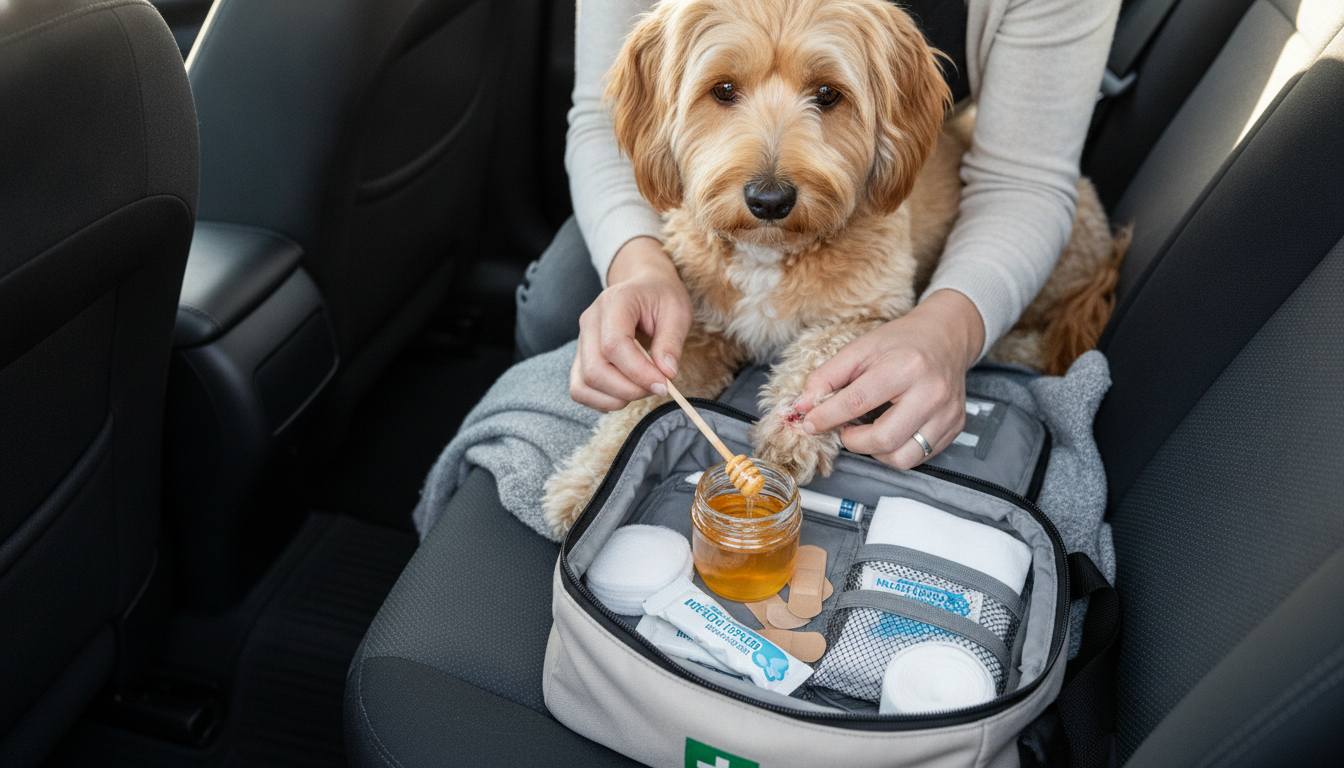
Honey earns a spot in a dog first aid kit because it’s a simple, shelf-stable item that can be useful in a few common emergencies. In small amounts, plain honey can help provide quick calories if a dog is weak from low blood sugar, and it can also serve as a temporary wound dressing to help protect minor scrapes until veterinary care is available.
How honey can help in common dog emergencies
Quick energy for suspected low blood sugar
If a dog is trembling, unusually weak, disoriented, or seems “off” after heavy exertion, missed meals, or in a toy-breed puppy, low blood sugar may be a concern. Honey can be rubbed on the gums in a thin layer to help raise blood sugar while preparing to contact a veterinarian. It’s not a substitute for diagnosis or treatment, but it can buy time during transport.
A temporary barrier for minor wounds
Medical-grade honey is used in some clinical settings, but most homes only have grocery-store honey. Even so, a light coating can help cover a small abrasion or hotspot area in a pinch and discourage drying and cracking until you can clean the area properly and get professional guidance. It should only be used on superficial issues—deep punctures, serious bleeding, and bite wounds need veterinary care.
Palatability for giving meds or fluids
A tiny amount of honey can make bland food more appealing when encouraging a dog to eat after stress, or it can help mask the taste of certain oral products. Keep the amount minimal to avoid stomach upset.
Safety notes before using honey
Use only plain honey—never honey mixed with xylitol or other sweeteners. Avoid giving honey to very young puppies or dogs with compromised immune systems unless a veterinarian advises it. If a dog is vomiting, unable to swallow normally, or unconscious, don’t put honey in the mouth due to choking/aspiration risk.
For step-by-step guidance and what to pack alongside it, see the main guide here: https://majesticdropsplaza.shop/why-honey-in-dog-first-aid-kit/.
FAQ
Can I use honey on my dog’s wounds?
Only for minor, superficial scrapes as a temporary cover after gentle cleaning. Skip it for deep cuts, punctures, bite wounds, or heavy bleeding and seek veterinary care promptly.












Leave a comment